Floating & Fixed Docks
Plan a dock around water movement, depth, shoreline access, vessel use, anchoring, flotation, gangways, and the way people move from land to water.
Explore dock construction
Marine construction across the coastal Carolinas
Bring the shoreline, access, boat, and structures together in one practical plan—from docks and lifts to seawalls, piers, walkovers, and repairs.
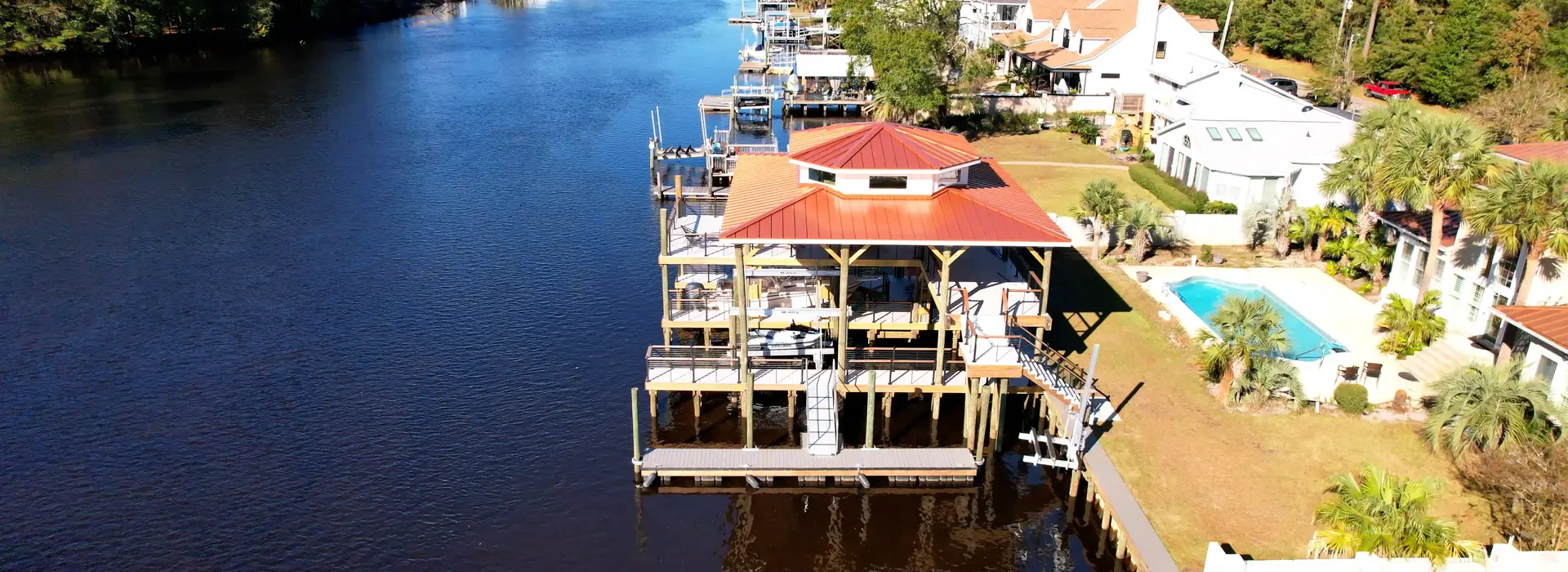
Larry Melton two-story boathouse · Intracoastal Waterway · Myrtle Beach, SC
Start with the whole waterfront
A dock does not work by itself. It meets the shoreline, supports movement over the water, serves a particular boat, and may connect to a lift, gangway, pierhead, deck, or bulkhead. Fixing one visible symptom without understanding those connections can leave the real problem in place.
Waterbridge Contractors of the Carolinas plans marine construction around the site as it exists today and the way you want to use it next. Residential, HOA, marina, and commercial properties each bring different traffic, access, maintenance, and coordination needs.
Choose the place to begin
Use these service guides to understand the main decisions. The free property assessment helps connect them to your actual shoreline, water, structure, and intended use.
Plan a dock around water movement, depth, shoreline access, vessel use, anchoring, flotation, gangways, and the way people move from land to water.
Explore dock constructionBuild or repair piling-supported walkways and pierheads for fishing, seating, boat access, utilities, and a dependable connection across the water.
Explore piers and pierheadsMatch the lift, drive-on, cradle, controls, pilings, and approach to the boat, site, water conditions, and daily launching routine.
Explore boat access systemsProtect and define the shoreline with new construction, replacement, repair, caps, tie-backs, drainage, and connections to nearby structures.
Explore shoreline protectionCreate a clear route across dunes, marsh, or uneven ground with site-appropriate framing, decking, railings, landings, and beach access.
Explore walkovers and walkwaysTrace movement, soft decking, damaged framing, worn hardware, flotation trouble, and unsafe transitions before choosing repair or replacement.
Explore repair and maintenanceThe right scope follows the site
The most useful assessment looks beyond the object named in the first phone call. Water level, bottom conditions, exposure, drainage, grade, existing pilings, vessel dimensions, traffic, utilities, construction access, and likely approvals can all affect the scope.
That is also why project photos are a starting point rather than a promise that one design fits every property. Waterbridge can evaluate what should remain, what needs attention, and which improvements should be coordinated instead of treated as separate jobs.
Review erosion, bulkheads, grade, drainage, landings, and the route from the property to the water.
Consider pilings, framing, decking, railings, pierheads, gangways, flotation, anchoring, and hardware as one load path.
Match lifts, slips, dock height, boarding, utilities, and clearances to the vessel and the people using the waterfront.
Work that holds up to a closer look
“Waterbridge did an excellent job for me on our deck and floating dock. They found and fixed additional issues. I am very happy with their work.”
The Waterbridge project archive includes residential docks, covered pierheads, marina systems, boat lifts, seawalls, bulkheads, commercial walkways, decks, bridges, and dune access across coastal South Carolina and southeastern North Carolina.
More specific planning
These pages address location-specific conditions and common project types while the broader service pages explain each system in depth.
Need something connected to these systems? Start with general contracting for coastal properties, or explore gazebos, drive-ons, retaining walls, and custom access. Waterbridge also evaluates commercial marine construction and shared waterfront access when the property and scope are a fit.
A useful first conversation
Send the address, current photos, and the structure or shoreline concern.
Explain the boat, access, protection, repair, or connected improvement you have in mind.
Waterbridge can assess the conditions and explain the practical design, approval, and construction path.
Before the assessment
These answers establish the starting point. Site conditions determine the final recommendation.
Waterbridge builds and repairs docks, fixed piers, covered pierheads, boat lifts, drive-ons, seawalls, bulkheads, dune walkovers, walkways, decks, and connected waterfront structures. The exact scope depends on the property and intended use.
Yes. Waterbridge evaluates new construction, replacement, repair, and connected upgrades. An assessment helps determine whether the existing structure can be repaired or whether replacement is the more practical path.
Waterbridge serves Horry and Georgetown Counties in South Carolina and Brunswick County in North Carolina. Availability and the right service depend on the property, waterbody, access, and proposed work.
Many waterfront projects require permits, approvals, drawings, or coordination with governing authorities. Requirements vary by location, waterbody, existing conditions, and the work being proposed, so they are reviewed for the individual property.
Begin with the property address, current photos, the structure or shoreline concern, the boat or access needs, and the result you want. A property assessment gives Waterbridge the site details needed to discuss useful next steps.
Start with the complete waterfront
Start with clarity