Private and shared access
Build for one home, an HOA, a resort, or a public-facing property with the width, landings, railings, and traffic pattern the site actually needs.

Coastal access with a lighter footprint
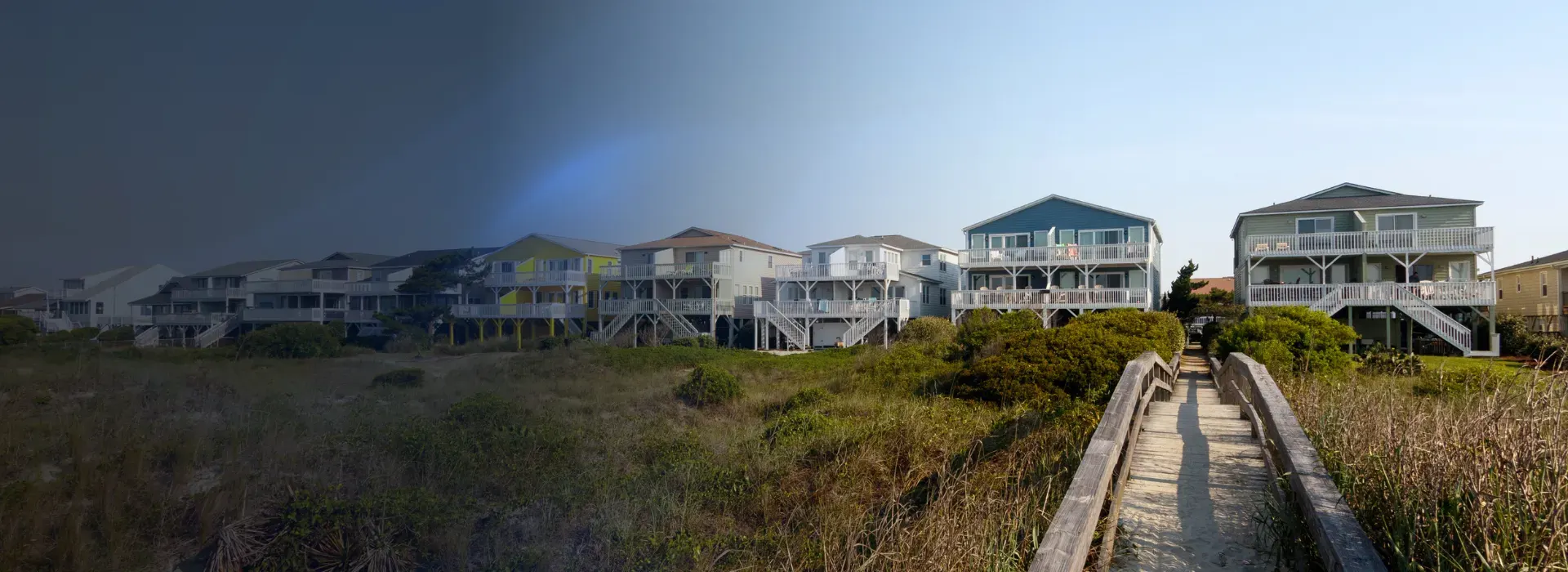
Create a safer, defined route to the beach without treating the dune as empty ground. Waterbridge builds and repairs access structures around the property, the people using it, and the coastal conditions underfoot.
Access and protection belong in the same plan
Walking directly over a dune can loosen sand, damage vegetation, and create multiple informal routes. It can also leave owners and guests climbing unstable grades while carrying chairs, coolers, or children.
A well-planned walkover concentrates traffic on a dependable structure. The route should respond to the dune profile, the home or shared property behind it, the beach approach ahead, and the approvals that govern work in a sensitive coastal area.
Build for one home, an HOA, a resort, or a public-facing property with the width, landings, railings, and traffic pattern the site actually needs.
Address weak decking, loose rails, deteriorated framing, unstable stairs, damaged fasteners, or storm-related movement before the route becomes unreliable.
Look past surface wear. A soft board may be localized, but recurring movement, leaning rails, loose stairs, corroded connections, or settlement at a transition can point to a wider problem. A complete assessment separates ordinary maintenance from conditions affecting the structure, then defines which components can remain and which should be repaired or replaced.
Follow the site, not a stock layout
The best route looks as though it belongs there. It avoids unnecessary turns, resolves elevation changes deliberately, and places stairs or landings where users naturally need them.
Keep routine foot traffic on one defined route instead of creating new paths through vegetation and shifting sand.
Coordinate the house, grade, dune line, beach approach, neighboring access, and the space needed at each transition.
Plan width, handrails, stairs, landings, seating, and shared access around the people who will use the structure.
Select framing, decking, fasteners, and details for salt air, sun, wind, sand, moisture, and repeated use.
Durability is more than the deck board
Sun, salt, moisture, blowing sand, and repeated foot traffic test different parts of a walkover in different ways. Long service life depends on the complete assembly, not one premium-looking surface.
Treated posts and framing provide a strong structural base when the grade and assembly match coastal exposure.
Hot-dipped galvanized connections and marine-grade stainless steel screws help exposed joints remain secure.
Wood, composite, or open-grate walking surfaces can be compared for traction, sand movement, heat, maintenance, and appearance.
These high-use details should feel stable, drain well, and connect cleanly to the home side and the beach side.
Completed Waterbridge work carries a 3-year labor workmanship warranty under the written warranty terms.

Permit-aware from the beginning
Coastal review can involve location-specific rules and agencies. Waterbridge identifies the likely design and permit path while the project is being shaped, without promising an approval outcome before the site is understood.
Review the dune, vegetation, grade, existing access, ownership, intended users, connected structures, and visible repair concerns.
Coordinate alignment, elevation, width, materials, stairs, landings, access needs, and likely permitting requirements.
Move through the approved scope, protect the surrounding area, and review the completed transitions and walking surface.
Real Waterbridge access work
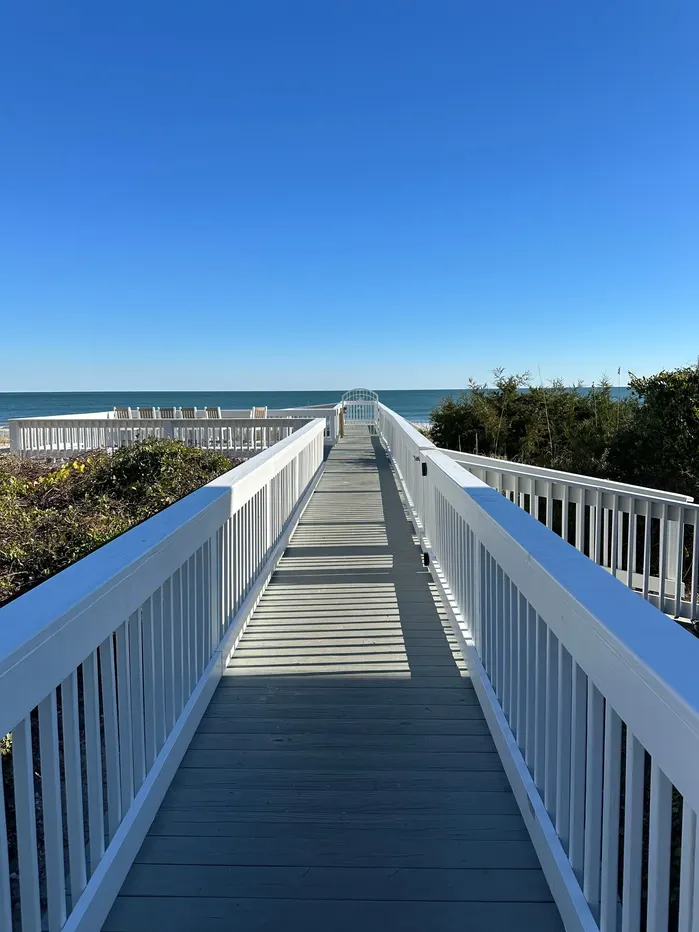
This completed South Carolina project creates a clear elevated route across the dune and gives owners and guests a direct approach to the beach.
Explore the Project GalleryWe did a major rehab to our 17-year-old pier, walkway, and pierhead. Waterbridge handled all aspects of the job, kept it on budget, and met or exceeded the scope.
Rich V. · Waterbridge customerRead more customer reviews
Common planning questions
A dune walkover is an elevated route designed to cross sensitive dune areas with fewer disturbances. Walkway is a broader term that can include fixed access across yards, wetlands, shoreline areas, and connected waterfront structures.
Yes. Waterbridge evaluates posts, framing, bracing, decking, stairs, railings, fasteners, transitions, and visible movement before defining a focused repair or broader replacement scope.
Coastal access work often requires review, but the exact path depends on location, dune conditions, ownership, accessibility needs, and scope. Those requirements should be identified while the route and structure are being planned.
Waterbridge serves Horry and Georgetown Counties in South Carolina and Brunswick County in North Carolina, including Litchfield Beach, Pawleys Island, Murrells Inlet, Myrtle Beach, North Myrtle Beach, Calabash, Sunset Beach, and Ocean Isle Beach.
One route. Less guesswork.
Start with clarity