New construction and additions
Map the structure, transitions, and route from one part of the property to the next.

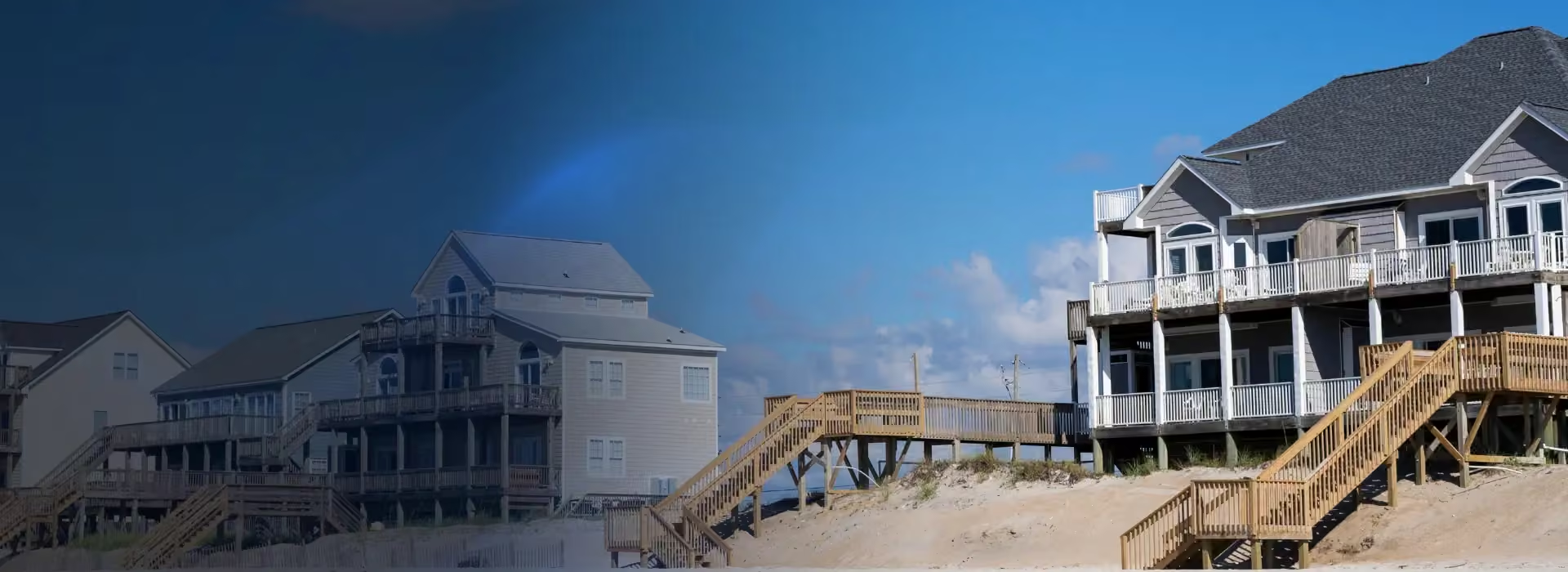
Make the whole property work as one
Thinking about a deck here, a walkway there, or a retaining wall between them? Pause. Map it as one plan. Those connections decide whether the property works as a whole.
Tie everything together
The deck meets the stairs. The walkway meets the grade. The retaining wall changes how water moves. Each decision shapes the next.
Waterbridge follows those connections across coastal South Carolina and southeastern North Carolina. A project may combine new work, repair, replacement, or multiple improvements in one plan.
Start with how the property behaves today and how it should work next. Then define what matters, what can remain, and what needs separate review.
To see how marine work fits the wider property, explore all Waterbridge services.
Map the structure, transitions, and route from one part of the property to the next.
Look beyond the patch to the supports, connections, moisture, or movement driving the damage.
Make decks, walkways, stairs, retaining work, and waterfront access part of one plan.

Start with what is actually there
A warped board, leaning rail, settled landing, or moving wall may be a clue—not the whole problem. A fresh coat cannot correct what is underneath.
Waterbridge checks what supports the area, what connects to it, and what the repair may affect. That brings the project boundary into focus.
One property. Fewer surprises.
Connect structure, access, drainage, materials, and maintenance before the first nail goes in.
Map how people, pets, boats, and equipment should move when the work is done.
Plan where deck meets door, stairs reach grade, and the path flows toward water.
Know what holds up the damaged area—and what relies on it—before choosing a repair.
Compare sun exposure, barefoot grip, color, compatible fasteners, care, and product requirements.
Plan how materials and equipment move past landscaping, fences, and utilities.
Separate construction from engineering, specialty, permit, and owner decisions before work begins.
Structure first. Finish second.
Every choice must fit coastal exposure, daily use, structural support, and long-term care.
Footings, posts, beams, joists, bracing, and connections are the bones beneath the visible work.
Compare wood and manufactured options for texture, heat, color, maintenance, and installation requirements.
Coordinate landings, gates, handrails, and changes in level with the main structure.
For retaining work, check footing, reinforcement, backfill, drainage, nearby loads, and why the wall moved.

More than one kind of coastal property
Waterbridge work spans marina, residential, shoreline, and beach-access conditions.


From a broad idea to a workable scope
Photos and goals start the conversation. The assessment grounds them in existing conditions, access, and the decisions ahead.
Share the address, photos, what is broken, what blocks access, and what you want to improve.
Review condition, grade, drainage, access, and questions for an owner, engineer, specialist, or approving authority.
Define what is in, what needs review, and where a separate decision belongs.
Waterbridge did an excellent job for me on our deck and floating dock. They found and fixed additional issues. I am very happy with their work.
Jon O. · Deck and floating dock customer
See the range in real settings
See Waterbridge work across homes, shared properties, marinas, and coastal access routes, then read what customers said.
Questions to ask before choosing a direction
These answers set boundaries. The assessment determines what applies to the site.
Waterbridge evaluates new construction, repair, replacement, decks, walkways, retaining structures, bridges, and connected waterfront improvements. The property and scope determine whether the project is a fit.
Often, yes. An assessment shows how structures, access, drainage, utilities, and marine work affect one another. It also separates construction from engineering, specialty review, or outside approvals.
Do not decide from the finish alone. Condition, damage source, connected structures, intended use, framing, movement, moisture, access, and approvals can change the choice between repair and replacement.
Yes. Waterbridge evaluates decks, dune walkovers, bridges, retaining walls, and connected outdoor improvements. Availability depends on location, access, conditions, and scope.
Start with the full property
Start with clarity