Cradle boat lifts
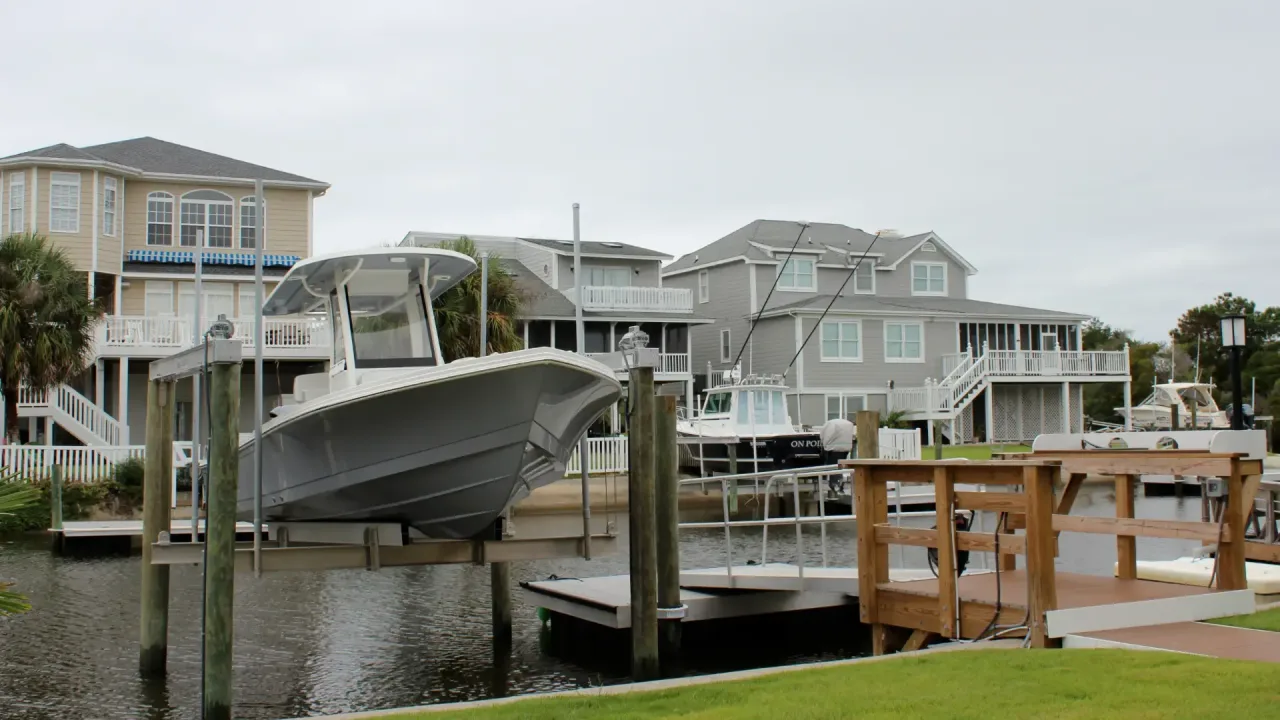
Raise a boat clear of the water with equipment matched to loaded vessel weight, hull geometry, bunks, clearance, controls, and the supporting dock or pilings.


Boat lifts, PWC systems, and ramps for local water
Plan the boat, dock, power, access, and water conditions as one working system—so launching feels easier every time you use the property.
Start with the way you use the water
A boat lift or ramp should fit the vessel and the waterfront around it. Capacity matters, but so do hull shape, beam, water depth, level change, dock height, boarding space, power, and construction access.
Waterbridge plans and builds boat lifts, PWC lift or drive-on systems, and boat ramps for Myrtle Beach and nearby Horry County properties. We review the full route from shore to boat before recommending the scope.
That local installation focus is different from our broader Boat Lifts and Drive-Ons service guide. It is also separate from maintenance: owners with an existing system can start with boat lift inspections and repair in Myrtle Beach.
Choose by vessel, water, and routine
Each system solves a different access problem. The assessment narrows the choice before equipment or site work is specified.
Raise a boat clear of the water with equipment matched to loaded vessel weight, hull geometry, bunks, clearance, controls, and the supporting dock or pilings.
Give personal watercraft a direct boarding and storage point. The watercraft, floating or fixed dock, freeboard, approach, and user access still need to fit together.
Create a practical launch route where the shoreline, grade, water depth, surface, vehicle or equipment approach, and applicable approvals support a ramp.
Not sure which system fits? Show us the property, the vessel, and the way you want to use both.

Fit before features
The boat brings more than a published dry weight. Fuel, batteries, gear, water, and installed equipment affect the working load. Beam, hull shape, balance, and bunk position affect how that load meets the lift.
Then the plan moves outward. Water depth and level change influence operating clearance. The dock, pilings, gangway, or floating section affect support and boarding. Motors, controls, and remote operation depend on an appropriate power plan and qualified electrical coordination.
A single equipment choice cannot correct a weak surrounding structure or an awkward daily route. When dock or pier work is part of the answer, connect it to the lift scope from the start.
A clear path from property to water
Send the address, boat or PWC details, dock photographs, and what you want the launch routine to feel like.
Walk the site, confirm water and access conditions, and identify support, power, connection, and approval questions.
Compare the practical lift, drive-on, or ramp option and document the surrounding work needed to make it function.
Complete the agreed work, then review alignment, clearance, controls, boarding access, and the route back to shore.
Real waterfront context
These Waterbridge projects show why the surrounding dock, pierhead, and access deserve the same attention as the equipment.

Browse more Waterbridge waterfront project photos or read customer reviews.
Plan the first conversation
Good answers begin with the actual boat, property, and daily use.
Share the boat make and model, loaded weight, beam, hull shape, and any plans to change vessels. Waterbridge also reviews the dock, available space, water depth, access, power, and the way you board before defining the installation scope.
The right choice depends on the vessel, shoreline, water depth, level change, approach, and how often you launch. A property may support one option better than another, or use more than one system for different watercraft.
Sometimes. The assessment must review the dock layout, supports, pilings, clearances, utilities, and safe boarding space. If the surrounding structure needs correction, that work should be planned with the lift instead of treated as an afterthought.
Major factors include equipment and capacity, support work, water and shoreline conditions, dock connections, electrical needs, construction access, and applicable reviews or permits. A property assessment is the right place to define those variables before a proposal.
Yes, depending on the equipment and condition. If you already have a lift that operates unevenly, makes unusual noise, or needs maintenance, start with the Myrtle Beach boat lift inspection and repair page so we can evaluate the equipment already in place.
Bring the vessel and waterfront together
Tell us what you own, what you want to launch, and how you use the water. We’ll help define the right next step.
Start with clarity